

When most people think of Lake Hartwell, they may immediately think of its current role as a tourist destination bringing business to Hart County, or its well-known history and old stories about its construction. What many may not think of, initially, are the numerous individuals and families who once lived where the over-50,000-acre lake now resides, and the property–sometimes in their families for generations–they had to leave behind.
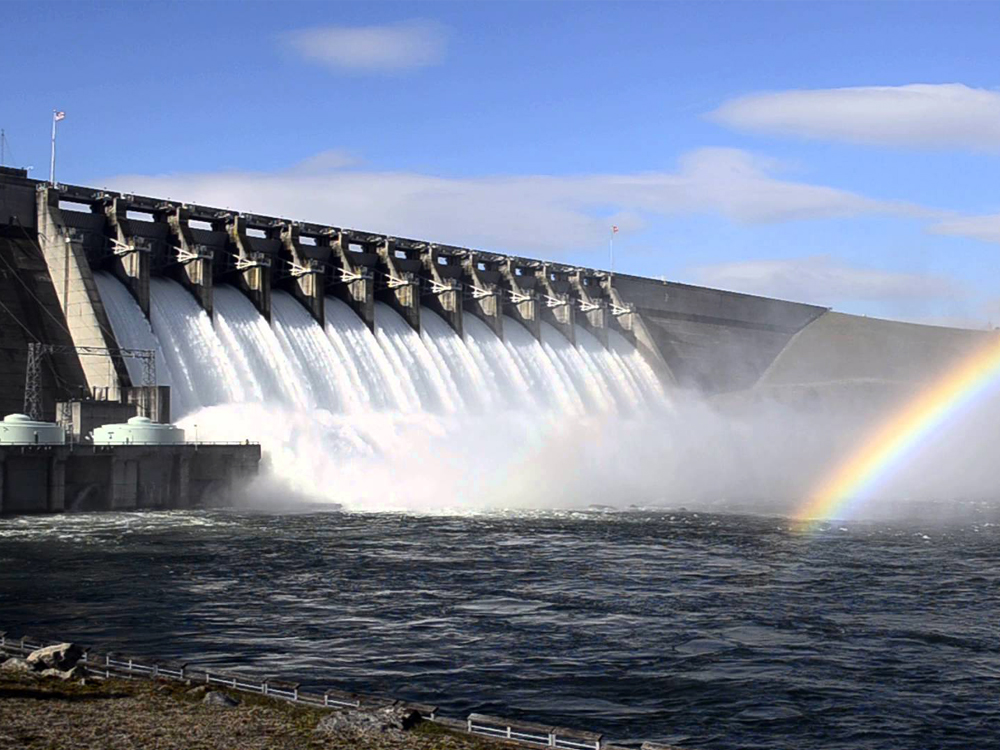
The dam was built by the U.S. Army Corps of Engineers (USACE) between 1955-1962. The reason for construction dates back to 1890, when a USACE lieutenant from the Savannah Office recommended constructing dams on the Savannah River to avoid flooding in Augusta. In 1933, the USACE finished its report for the Savannah River Basin and recommended building several dams in the upper basin, including Hartwell Dam. The Flood Control Act of 1950 authorized the construction of the dam, and in 1955 construction began. After completion in 1962–and during construction as well–the dam brought much industry to Hartwell and the surrounding area, boosting the economy.
Beneath the surface of well-known dam history, however, lies more complexity. The stories of how the dam’s construction uprooted people, and the many mixed emotions surrounding the dam because of displacement, are worthy of reflection.
Lifelong Hart County residents Dean and Alan Teasley both worked on the dam’s construction, beginning in its early days. The project prompted both of the brothers to continue surveying careers after it was completed, with Dean becoming Hart County surveyor in the 1970s.
“I was there when they poured the first bucket of concrete on that dam,” Dean said. “When me and Alan were kids, we’d go down on the river before the dam was built…They had this [survey marker] sticking up, and my dad would tell us, ‘They’re gonna build a dam there someday.’ And we didn’t think too much of it. We didn’t think that would happen–that we would wind up working on it.”
In a close-knit community, the Teasleys felt for people who were displaced. “There was a lot of folks that got displaced from off their farms [so they moved to other farmland],” Dean said. “A lot of them thought they were ruined…sometimes [the government] took a lot of their land and they didn’t have much left to farm, so a lot of them sold it.”
David Coughlin, who remembers driving past the dam with his family during his childhood and is to publish a book titled Hartwell Lake: Durrett Shoals: The Early History & Construction of Hartwell Dam, described the legal process. According to the Rivers and Harbors Acts of the 1940s and 1950s, the government must pay people for their land. The owners of property needed for the dam’s construction could also challenge the amount they were paid in court; the case could be heard by a jury or by commissioners hired by the court. If the owners still weren’t satisfied with the amount they received, they could appeal the ruling to a higher court.
“The government was going to have that property no matter what. The courts just determined compensation,” Coughlin explained.
However, he added that the court tried to make the process “streamlined,” understanding the emotional consequences of displacement. For instance, many appraisers and those who negotiated with property owners–perhaps the most emotionally heavy task–were often locals. “It’s better than someone knocking on their door and coming in and they’ve never seen them before in their life, and they’re saying, ‘You gotta move out,’” Coughlin said.
Coughlin added that most people whose property was bought by the government were “seeing amounts of money they had never seen before” and tended to challenge the decision less in court than they may today; still, hard feelings were natural.
“They could do other things besides farm–they could’ve raised cattle, they could’ve done anything that was involved in agrarian-type living. They made their living off the land. And [the government’s saying], ‘You gotta pick up and leave,’” Coughlin said.
Peggy Adams and her family are a prime example of this phenomenon–how farmers were forced to relocate, often trying to find land close to where they previously were and retain some semblance of normalcy. The government bought her family’s farm–which was near Dean Teasley’s–around 1955-1956. At the time, Adams was about 16 years old and in college, out of the house. Adams’ brother, George, also worked as a surveyor for the dam project and helped relocate cemeteries. Their 200 acres included an orchard and cows, vegetables they raised and sold, and some cotton.
Adams shared that upon being told the family had to move, her father, Luther Shiflet, “didn’t take it lying down.” Still, he accepted the money and the family moved the house about a quarter of a mile from their original property. The family now had less–but more arable–land. The move also resulted in changes in what they farmed–they mostly raised grain, but still had some animals, such as cows and hogs.
“I guess he thought [the government] treated him fairly…but he was upset, because he had worked so hard,” Adams said. Naturally, their old farm held deep sentimental value as well. “He knew the rocks and the gullies and the shape of that old farm, and then he had to leave all of that. And all that was left was the little fruit orchard and a little rise where the house sat.”
Having witnessed the experiences of many other displaced and “dismantled” families, Adams understands the nuance of the situation and recognizes that her family was more fortunate than others. She ultimately stated that her family “benefited from it” but added, “I don’t know that my dad would say that.”
“It was not a bad thing. And I think the dam overall has brought so many interesting people this way, and jobs. But individually, families hurt, having to leave there and what they worked hard for. But when you look back over it, you assume everyone did as well as they had been doing once they got settled again. So I guess it was fair; it didn’t feel like it because sentimentally, you wanted to stay where you were at that time,” she said.
Displacement affected a host of people, not only farmers. Mark Temples’ parents worked in textile mills, so they kept the same jobs after they moved, but his father was still upset. While he did not try to challenge it in court, his frustration was amplified by how he was unable to find land close to their previous home, and had to move seven or eight miles away instead. Other family members who were displaced moved close by to try and retain a sense of community.
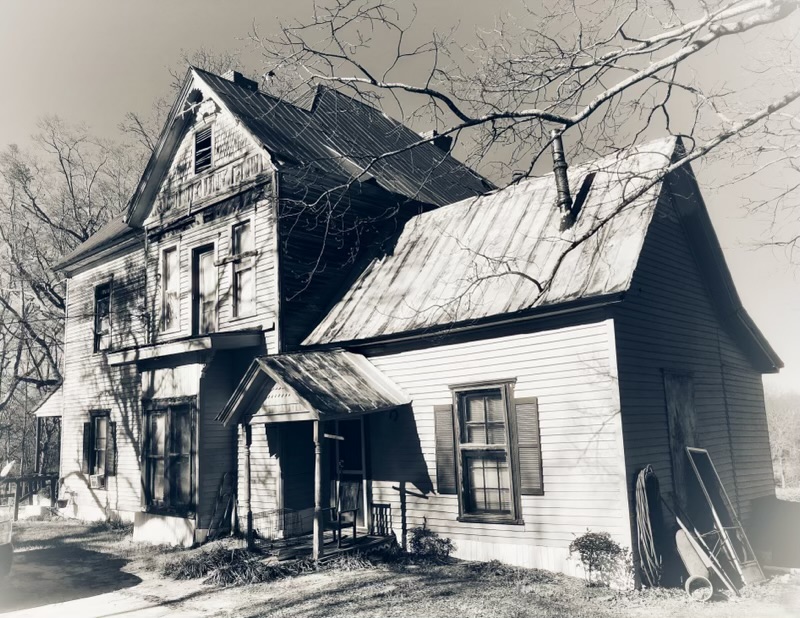
On the other hand, Larry Hill told The Sun how the government buying their land was purely beneficial for his family. As the government only needed their bottomland for construction, they were able to stay in their house and keep it where it was. The empty house still stands today and was occupied until only a few years ago. The family used the funds to get indoor plumbing and a well, and later provided a financial cushion for the family of 13 when Hill’s father’s health suffered. His contrarian experience demonstrates that within such a complex array of reactions to the dam, there was a degree of nuance that is often overlooked. He ultimately believes it was beneficial, not only for his family but for the whole community.
Community members whose families were not directly affected by the dam were still impacted, emotionally and otherwise. Larry Torrence pointed out how many of today’s volunteers moved to the Hartwell area primarily because of the lake, demonstrating its ripple effect. Many of these volunteers contribute to the beauty and vitality of the city, which in turn supports more tourism.
“I can’t imagine what my hometown would be today without the lake,” Torrence stated.
Jim Cobb, history professor at University of Georgia, remembers people who were displaced moving into his community. A portion of his uncle’s property was bought by the government for what his uncle considered “huge money,” allowing him to then sell the sum to people hoping to build lakefront property.
Cobb, too, sentimentally recalls the effects of the dam’s construction, both positive and negative, and considers the phenomenon holistically. For many who experienced displacement or who remember the dam’s construction in general, while they recognize the significance and positive contributions of the dam, time left them still sitting among what they previously knew.
“It changed how you felt about where you were in Hart County. I remember when they finally shut the floodgate and started backing up water, and we would go up there to check on the progress of the water…because I was young enough to be there, I could remember it,” Cobb told The Sun. “The many times I went out with friends later on Lake Hartwell, I still have trouble imagining where we really are because I’m still thinking about how it was before the water backed up.”
Adams, too, still imagines her family’s old property and the places that were most special to not only her, but to many other community members–a collective memory that is fading as more time passes.
“All of your childhood is there,” she said. “But I remember spots on our farm that were special. Especially a spot where two streams met, and the trees had everybody’s initials on it who dated. You still see those places.”
For Cobb, the dam’s construction was also a watershed moment for Hart County. The era brought not only the dam, but also integration, along with many farmers no longer growing cotton; in all, there was a sense of uncertainty and upheaval. These pieces of history, both demolished and untouched, are increasingly worthy of reflection, as the amount of people who recall them grows increasingly scarce. The myriad of emotions about the dam from uncertainty, to excitement, to anger, to begrudging acceptance and beyond provide insight into not only commonly-known historical fact, but also the critical human experiences behind those facts.
“You think of a place like Hart County, where nothing much ever changes–up until that point,” Cobb said. “It was a time when the earth was shaking a little bit in Hart County.”