
Sierra Burke
Local Columnist
There is something growing on lawns and in landscapes that is the talk of the town.
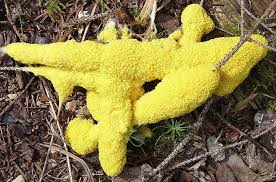
It moves, shape-shifts, and has a very unattractive look.
Slime molds are a very common occurrence in lawns and landscapes this time of year, and can be off-putting to those who encounter them.
Slime molds belong to a class of fungi known as Myxomycetes. These organisms obtain their nutrients from dead or decaying matter and are typically most prevalent following extended periods of wetness.
Flushes of slime mold growth are often observed after heavy rain storms that were preceded by long periods of dry weather.
Slime molds come in all different shapes, sizes, and colors including yellow, white, black, orange, and brown. Their colors can vary based on environmental conditions such as temperature, pH, and what substances they are consuming.
They can be found in lawns, flower beds, mulch, gardens, and anywhere else organic matter is present.
Slime mold spores germinate into structures that eventually merge together to form a large plasmodium, which is commonly known as ‘the blob’, based on its appearance. The plasmodium is a shapeless growing mass that may reach up to two feet in diameter.
Slime molds creep along slowly, and can travel up to several feet a day. They do not cause any direct injury to plants but if the plasmodium is thick and persistent, it may inhibit some photosynthesis which can cause mild yellowing of the leaves.
Slime molds are essentially harmless and are only considered an unsightly nuisance. Slime mold pustules typically disappear after two to three days, so typically, no control is needed. However, if you feel as though control is warranted, there are a couple of methods that you can use. The best way to get rid of slime molds is to break them up and dry them out. You can achieve this by raking up and disposing of slime molds found on mulch, or if you are controlling on turf, mowing the lawn and raking up the thatch.
While these shape-shifters can add an unattractive element to our lawns and landscapes, they are typically harmless and do not stick around for long.
If you have any questions regarding slime mold identification or control, please call the local Extension Office at 706-376-3134.