
An urban legend is defined as a genre of folklore concerning stories about a sometimes scary event that many people believe to be true but largely are not.
As a writer and storyteller, I love a good urban legend.
Take the Boston Red Sox infamous ‘Curse of the Bambino,’ for example.
The Sox didn’t win a World Series for 86 years, and many of their fans believed that futility was caused by Boston’s owner selling their superstar Babe Ruth to the New York Yankees in 1919.
Every post season loss without a ring, Red Sox fans were convinced that Ruth was reaching out from the great beyond to cause them more misery.
Of course, Boston went on to win the World Series in 2004, 2007, 2013, and 2018 leaving the curse on the ash heap of history.
In my former home of Tallahassee, there’s another urban legend circulating regarding hurricanes and the city’s consistent near misses with some of the biggest storms to ever hit the Sunshine State.
Since 2016, Tallahassee has been affected by six hurricanes including Hermine, Irma, Michael, Idalia, Debbie, and now Helene.
Each of these storms were forecasted to directly hit Florida’s Capitol City at one point or another. In each case, seemingly at the last possible moment, the forecast veered the hardest parts of the storm away mitigating the damage to the city.
I’m sure a meteorologist could go point by point on what steered the storm’s center away from Tallahassee, but ask any resident, and they’ll tell you why: It’s the MagLab.
The National High Magnetic Field Labratory, dubbed the MagLab by locals, is located on the campus of Florida State University, and houses the largest and highest-powered magnet lab in the world.
Tallahassians have now come to believe its magnets can affect the weather.
Tim Murphy, head of the lab’s largest magnet facility, said the MagLab gets a plethora of calls prior to a hurricane.
“We’ve had people ask us to turn on our magnets or reverse the field to move the storm,” Murphy said.
The MagLab’s website even tries to downplay the urban legend.
“The fact is, these strong fields are confined to an extremely small space inside the magnet where scientists put samples to study,” the website stated. “Outside of the magnet, the field is actually quite weak, and tapers off to zero within just a few feet for most of our magnets. So – sorry, but we have absolutely no impact on weather patterns or hurricane paths.”
Yet with every near miss, the legend continues to grow. There’s now a handle on the social media platform X titled @The_TLH_Magnet, which gives the perception of proof that the magnet can move storms away from Tallahassee.
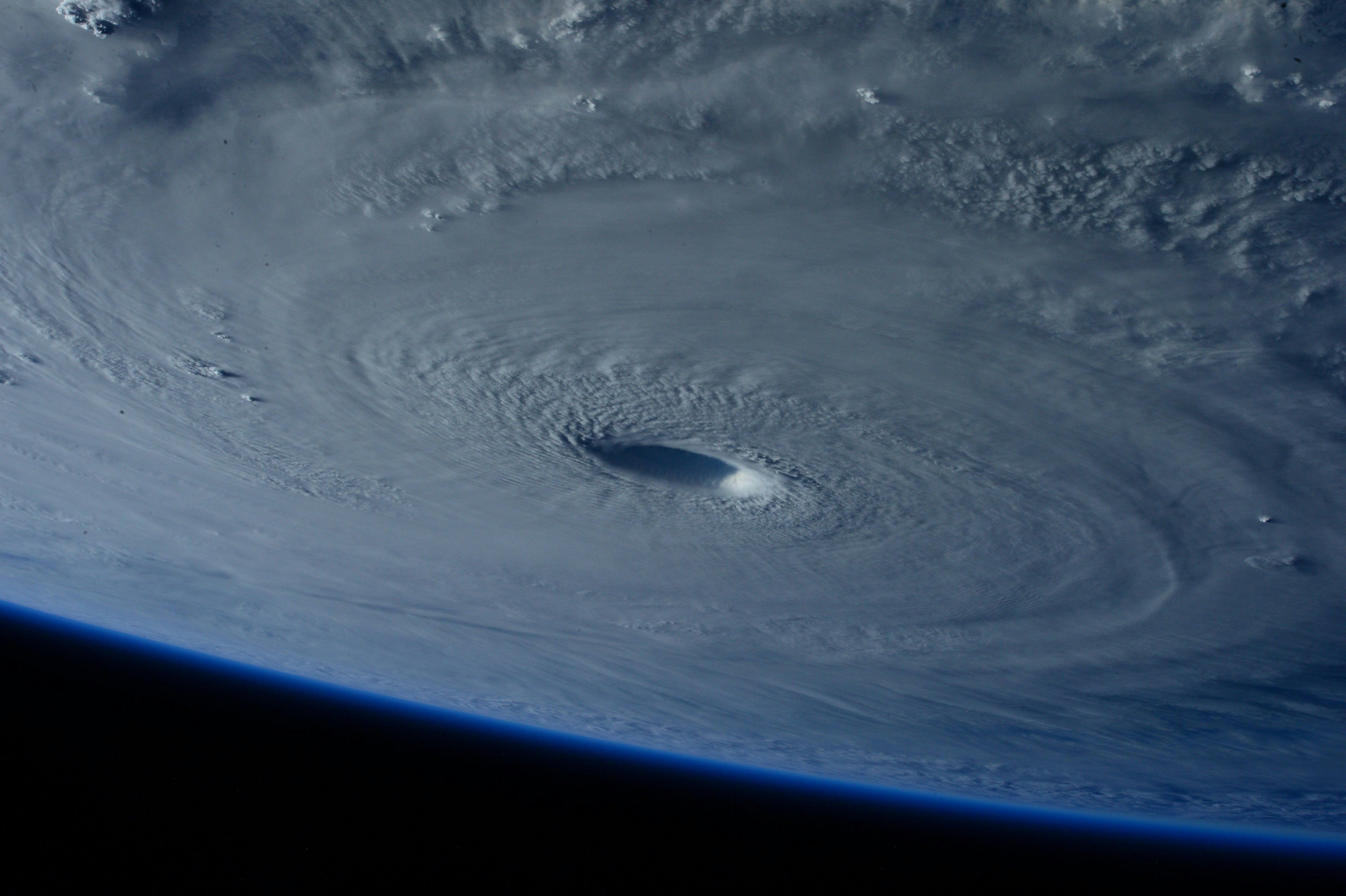
It’s most recent post showed a picture of Helene’s eye, veering off ever so slightly to the East with a caption that read, “This is what I do.”
I’ve always kept tabs on Tallahassee’s MagLab even since my move to Northeast Georgia. The lab’s Director of Public Affairs, Kristin Roberts, is a good friend and former work colleague of mine.
Of course the legend isn’t true, but it makes for a good story, and keeps people's minds in Florida's Big Bend at ease.
For the urban legend to work in this case, the magnet would have purposely shifted Helene’s eye to pass right through Hartwell Friday morning leaving thousands without power. It would have purposely caused the destruction in Western North Carolina.
I’m fairly certain the MagLab staff isn’t that vengeful, and Roberts and her team have a difficult needle to thread as a scientific institution to promote their powerful magnets that generate world record fields in small spaces while consistently downplaying their non-existent role in the weather myth.
That said, as another tropical system is bearing down on Florida’s panhandle later this week, it will be interesting to see which way magnet blows.
Patrick Fargason is the editor/publisher of The Hartwell Sun and writes a weekly column.